
The UK Property Lens: The ‘Great Expectations’ Edition

The UK Property Lens: The ‘Great Expectations’ Edition
(This article is taken from the latest edition of The UK Property Lens, Viewber’s LinkedIn newsletter covering property market insights, trends and industry analysis.)
Has there ever been a stronger narrative in the property market than realistic pricing?
Viewber’s unique analysis compared six months of Rightmove average asking prices in England to gauge how ambitious sellers have been when it comes to their home’s value.
Rightmove House Price Index data, reflecting asking prices
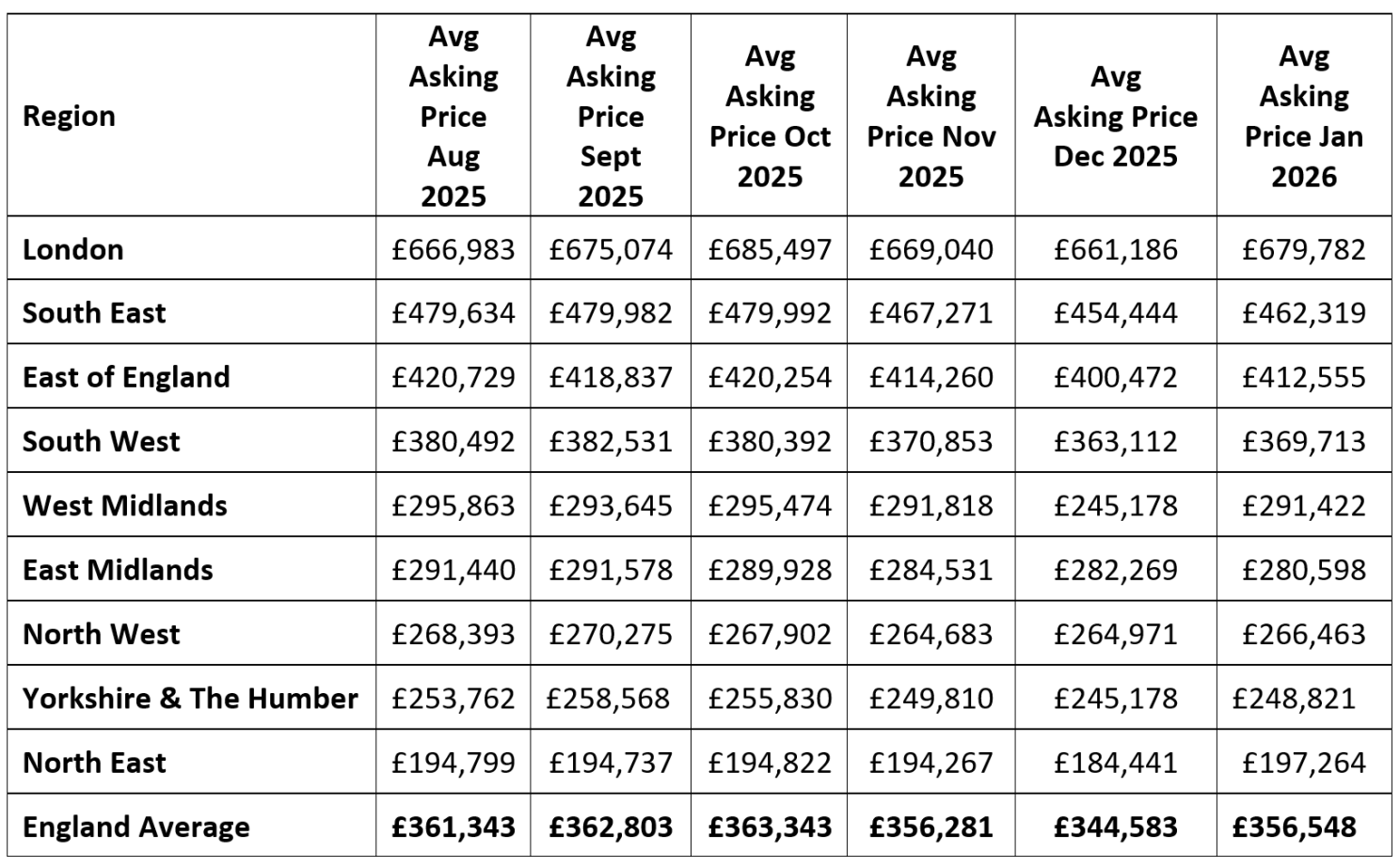
Rightmove Average Asking Prices
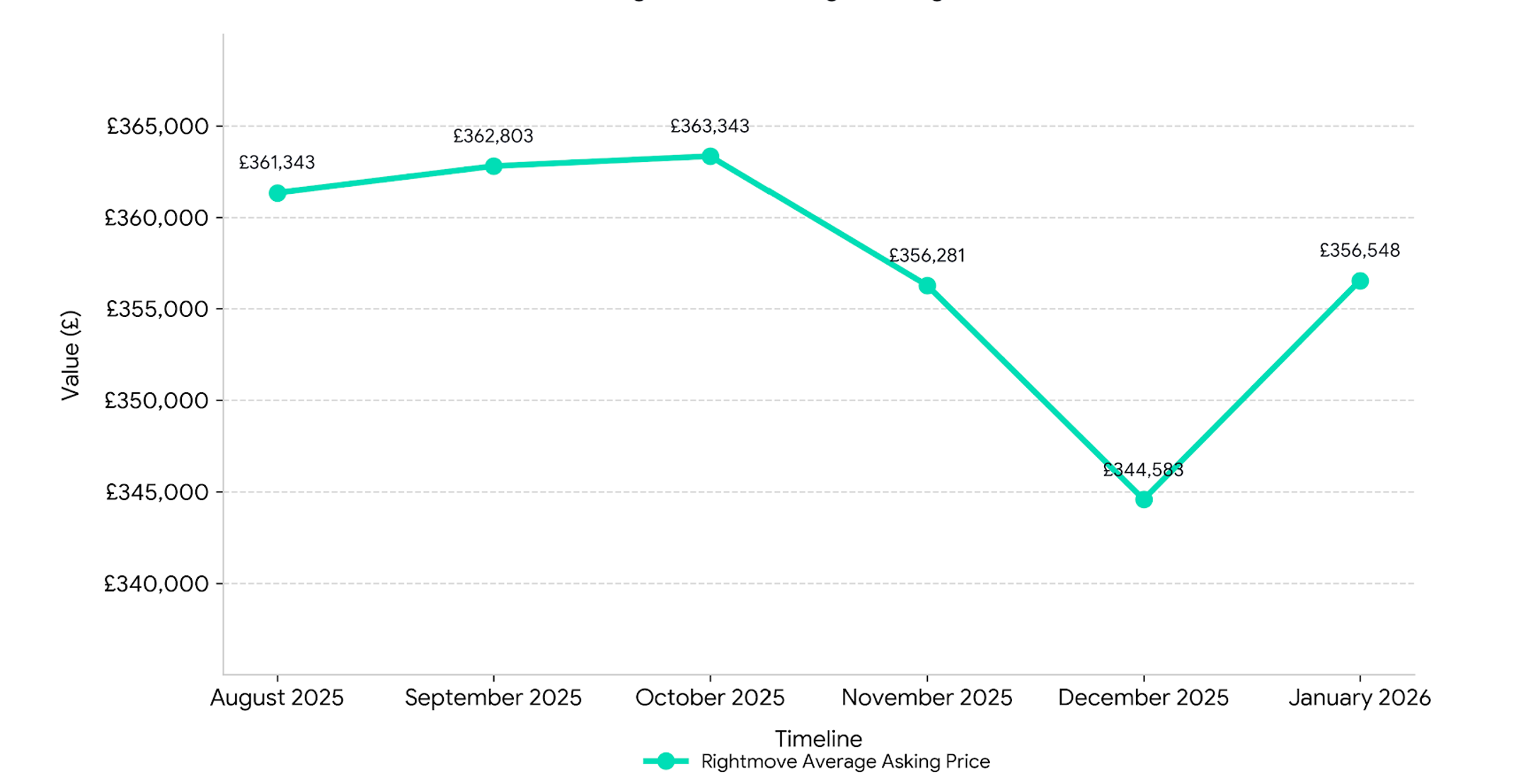
We also analysed six months of Land Registry sold prices in England, taken three months after the Rightmove dates. This gap reflects a typical time lag from listing to completion.
Land Registry sold price data*
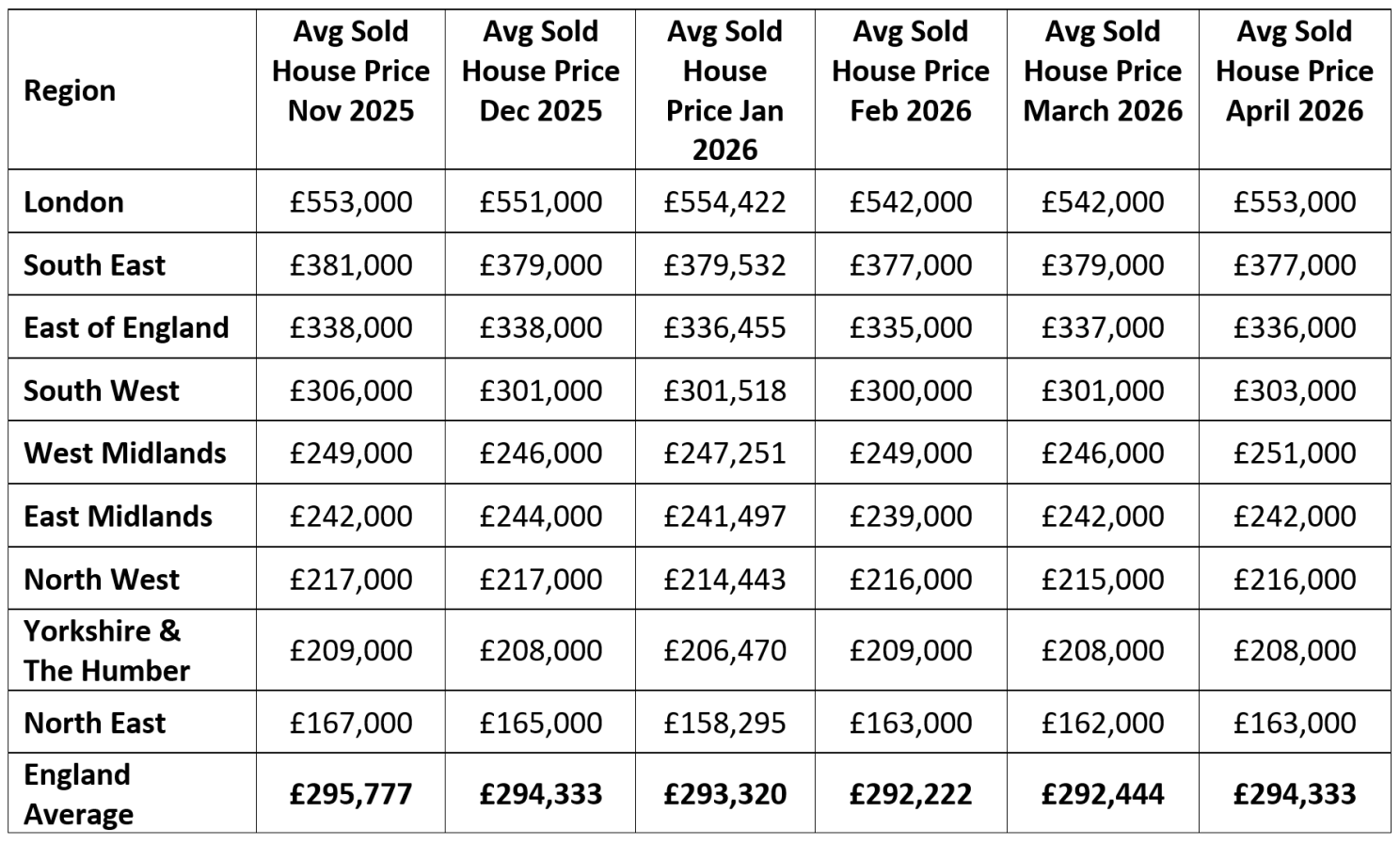
Land Registry Average Asking Prices
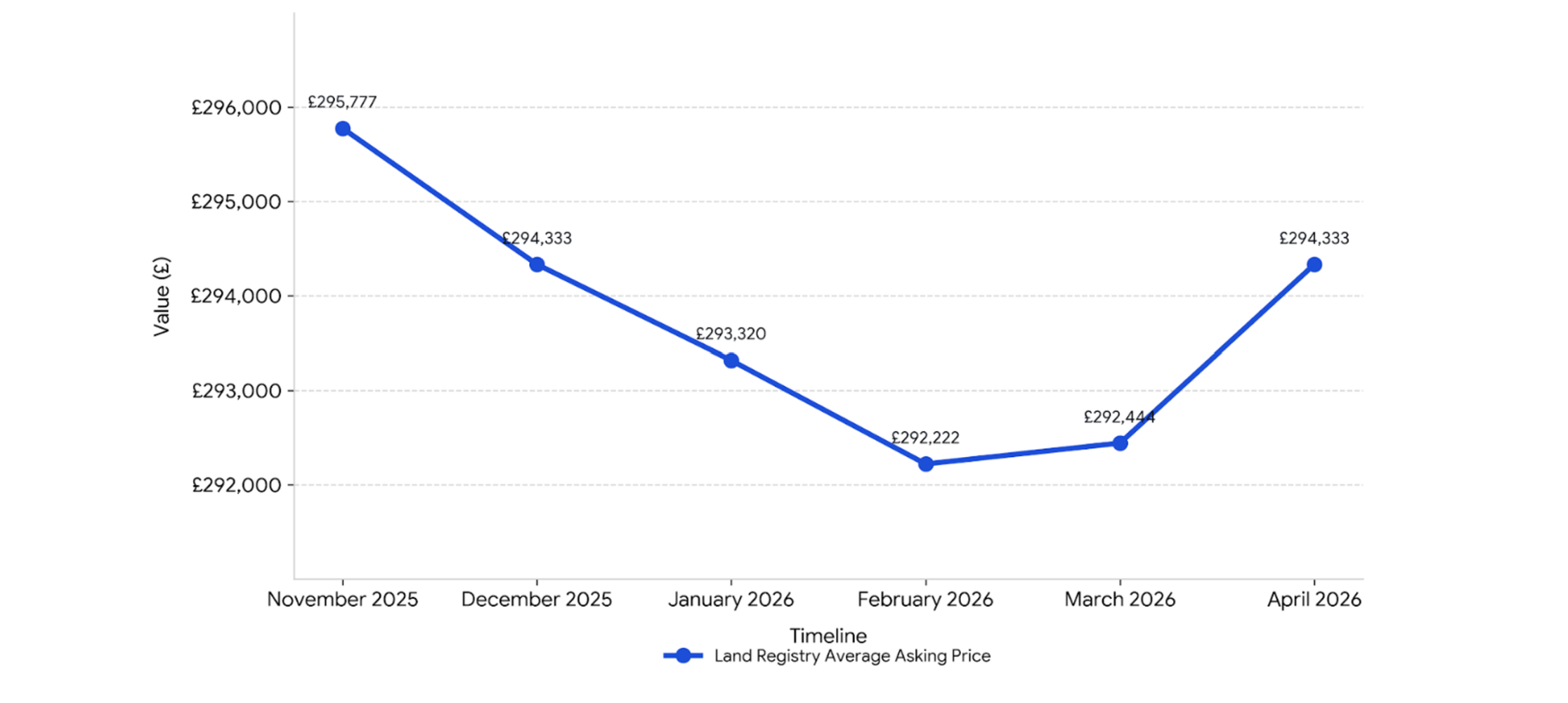
The price of greed: the downfall of ‘ambitious’ sellers
The trajectory of Rightmove’s average asking prices between August and October 2025 did not match the trajectory of Land Registry’s average sold price in the corresponding period. It demonstrates sellers were single-minded at a time when sold values were actually falling.
Purchasers particular on price
Our analysis of Rightmove’s average asking prices between August 2025 and January 2026 also revealed it was only the Autumn Budget – especially the prospect of higher stamp duty – that stopped ambitious sellers in their tracks.
The average asking price in England plunged £7,062 between October and November 2025, and a further £11,698 between November and December 2025, just after Chancellor Rachel Reeves addressed the nation. Conversely, corresponding sold prices (between January to March 2026) fell just £876.
The stark contrast reflected a wake-up call for sellers with great expectations. They took advice to adjust expectations and priced more realistically.
Regional winners and losers
It appears the message about realistic pricing is getting through. Out of 9 English regions, only two ended our six month monitoring period with an asking price higher than where it started.
London was one, with an average asking price of £666,983 in August 2025, rising to £679,782 in January 2026. The other was the North East, with an average asking price of £194,799 in August 2025, rising to £197,264 in January 2026. The other seven regions saw sellers revise their asking price downwards, with the South East sellers slashing £17,315 off their asking price.
This moderation almost exclusively filtered through to corresponding Land Registry figures (taking the time lag into account). Two regions saw their average house price end the monitoring period at the same value as they started (London and the East Midlands).
Six regions saw sold prices fall. The biggest proportional value drop was in the North East. The West Midlands was the only region where average sold prices increased – up from £249,000 in November 2025 to £251,000 in April 2026.
Post Budget recovery
The dust quickly settled on the Autumn Budget and the impact on asking prices was almost instant. Sellers in England returned to ambitious ways, with almost £12,000 added back to the average asking price in January 2026.
‘Price it right, price it once’ still relevant
Price sensitivity and managing seller expectations remains a hot topic. In May, Zoopla revealed that 44% of UK homes listed for sale in the past 3 years failed to sell. Overambitious and unrealistic pricing was cited as the main reason, leading to 53% of sellers reducing their asking price as the only way to attract a buyer.
The general public agreed. When Viewber ran a survey earlier this year, asking ‘do you think sellers are too unrealistic with their asking price’, 100% replied yes.
Price sensitivity was also noted in Q2 2026. “Movers replaced confidence with caution, partly due to interest rates and affordability,” commented Sandra McKinnon, Viewber’s Director of Partnership Development.
“Our agent clients say buyers are still looking but decision-making cycles are getting longer, more considered and with extra price scrutiny. Unsurprisingly, it’s the sellers who price realistically that are progressing. Agents must be disciplined when it comes to valuations.”
The current market snapshot
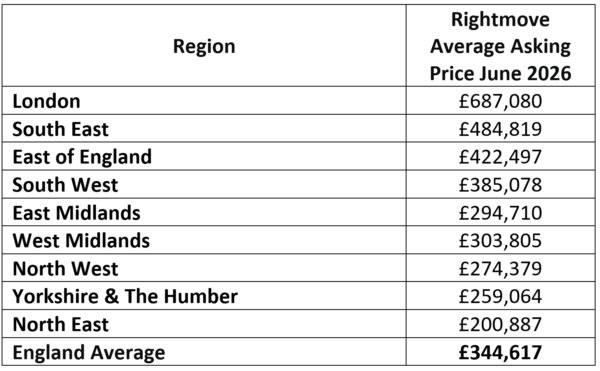
With Rightmove reporting buyer demand down 10% in May 2026, compared to May 2025, mortgage rates remaining around 5% and the number of sales agreed down 6% compared with last year, realistic pricing will underpin Q3 2026. This is already being reflected in asking prices, with June’s at one of their lowest for 12 months.
When distance divides: overlooked opportunity?
Our data analysis also established just how far buyers are willing to move for affordability. The pursuit isn’t clear cut. Viewber’s least active areas are the Outer Hebrides (Western Isles), the Isle of Man, Kirkwall, Orkney and Northern Highlands, the Shetland Islands and Dumfries & Galloway
There’s no denying many of these are remote, rural and island locations, where property transaction volumes are naturally lower than in major urban centres, but these areas represent amazing affordability.
Less activity in these areas dovetails with findings from two other Viewber survey questions. When asked ‘how far would you be prepared to relocate from your current home to afford your next move?’, only 17.6% said they’d be prepared to move 100s miles away. A further 17.6% considered moving overseas and 17.6% would consider moving to another county. The majority – 47.2% – would consider a more modest relocation outside their current town or city.
In contrast, when asked what their priority was when moving home, 50% said ‘price first, job second’. Only 25% said ’job first, price second’ and 25% said ‘family/friends over job/price.’ It appears people will only move so far for affordability.
The cities streaking ahead
Analysis of city-based Viewber activity saw patterns emerging. The largest volume of appointments were completed in Birmingham, Sheffield, Nottingham, Liverpool, Manchester and Newcastle.
It therefore came as no surprise that Liverpool, Newcastle and Manchester all featured in Zoopla’s top 20 fastest-growing markets in June 2026. The portal cites affordability and population as reasons for the heightened moving activity.
In the capital, Viewbers were booked most frequently to attend properties in South East, South West and East London.
Landlords chasing yields, not a quick exit
Some of that activity can be attributed to landlords. Another survey question revealed property investors are on the move but not necessarily quitting. When Viewber asked landlords ‘are you selling properties but replacing them with buy-to-lets in better-yielding areas?’, 33% said yes, they were moving all their buy-to-lets for better yields, while 33% said they were moving some. Zero said they were keeping all their buy-to-lets in current locations.
Although an additional 33% said they were leaving buy-to-let completely, there is hope for private landlords of the future. Our poll revealed 80% of respondents hadn’t been put off becoming a landlord by the Renters’ Rights Act.
The future in focus
Chris Fyfe, Director of Business Development:
“The property sector? It’s moving away from traditional high street models and more towards technology-enabled and self-employed structures. This shift reduces overheads, improves efficiency and facilitates a more personalised customer experience. Vendors and landlords will take more control too, with new self-service platforms that make buying, selling, and letting property faster, simpler, and more cost-effective.”
Ed Mead, Founding Director:
“Extra compliance is being foisted on agency, leading to further constraints on employment. Movement will stay subdued due to uncertainty concerning world economics and now unknowns in UK Government policy.”
Sandra McKinnon, Director of Partnership Development:
“The customer experience will become more important than ever and agents must remember overpriced stock sitting on the market breeds vendor discontent. An improved, consistent experience needs to be delivered but with leaner teams – that’s why Viewber is seeing a growing reliance on our flexible, on-demand support. Q3 2026 will deliver steady activity underpinned by price sensitivity.”
*Price includes open market, cash and auction property sales
Stay ahead with The UK Property Lens
Want more property market insights, data analysis and industry trends from Viewber?