
Will Your Adult Children Ever Leave Home? The Rise of the UK’s ‘Full Nest’
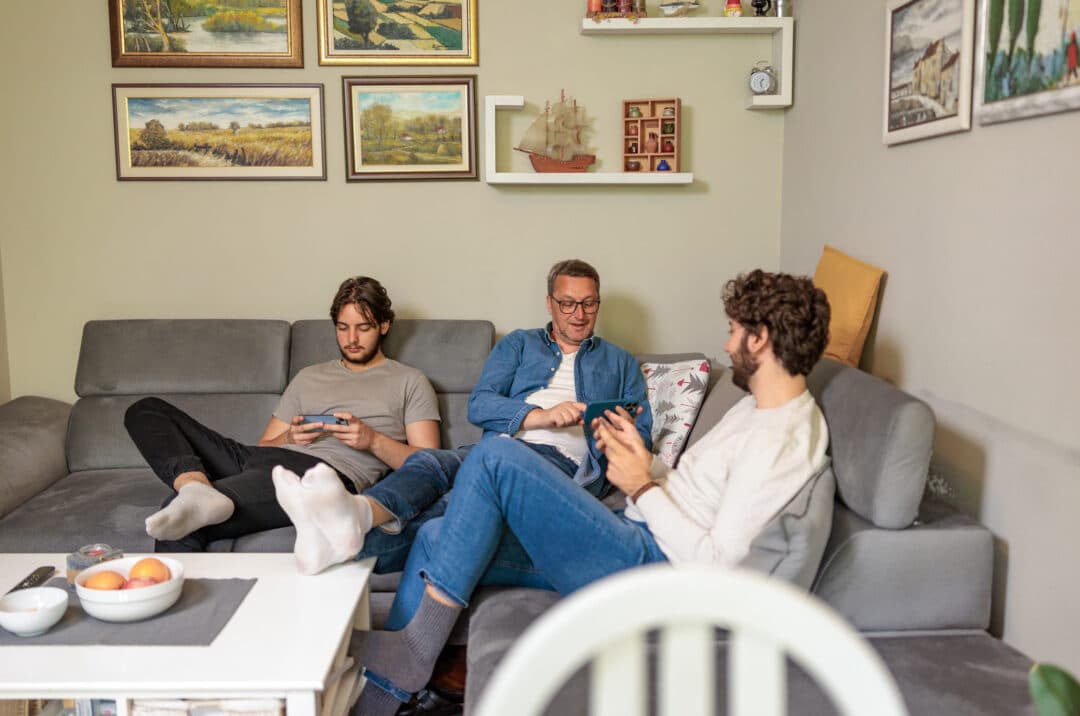
Will Your Adult Children Ever Leave Home? The Rise of the UK’s ‘Full Nest’
Family living arrangements have changed radically over the last 100 years. History paints a fascinating picture: multigenerational households driven by poor housing, poverty and pooled labour; tough inter-war years that limited progress, and a post-war boom that saw housebuilding and the labour market flourish.
By the 1950s and 1960s, a clear path had emerged. Leave school at 16 years old, find a job and move out of the family home around 18 – probably when there were wedding bells. Although some parameters changed over the next few decades – the rise of cohabitation before marriage and delays to starting a family – it was still possible for young adults to leave the family home and survive, even thrive.
The ‘empty nest’ phenomenon was the norm, with middle aged parents rattling around in the family home, retirement in grasp, and dreams of travel, lazy days and a tidy home. The empty nest became a trope used by estate agents to encourage downsizing: “move somewhere smaller, free equity and fund a new lifestyle.”
Feet under the table for longer
The Office for National Statistics (ONS) is one source who has long been charting family living arrangements. Its figures from the 2021 Census revealed how young adults were staying in the family home for longer. In fact, half of young people in England and Wales had moved out of their parent’s home by age 24 in 2021 – up from age 21 in 2011. These trends are captured in the ONS Families and households in the UK: 2024 report.
The same Census also highlighted how 2.1% of households in England & Wales were multigenerational in 2021, compared to 1.8% in 2011. With Covid, an ensuing house price boom and a subsequent run of record-breaking rent rises, the ONS used 2024 to reveal its latest estimates of family life, with a report entitled Families and households in the UK: 2024.
The headline? Parents and young adults are living together for even longer. Projections show 3.6 million people aged 20 to 34 years lived in a family with their parent(s) in 2024 – a 9.9% increase compared to 2014. Within that figure, 33.7% of men aged between 20 and 34 years lived with their parent(s) in 2024, compared to 22.1% of women.
Now, in 2026, new research illustrates how the trend is deepening. Recent research, published by the Institute for Fiscal Studies (IFS), revealed the proportion of UK adults in their 20s and 30s co-living with their parents increased by more than a third between 2006 and 2024. More detailed figures on this shift and the “hotel of mum and dad” phenomenon have been covered in The Guardian.
While some young adults are on an unbroken streak of occupation, others are coming back to the family home. Boomerang children have always existed but it’s a trend The Institute for Social and Economic Research (ISER) at the University of Essex has recently quantified.
It found 15% of 21- to 35-year-olds returned back at least once after leaving home between 2009 and 2020.
The prominence of young adults co-living with their parents was the topic of this article published by The Guardian at the end of 2025. Entitled: Rise of the full nesters: what life is like with adult children who just can’t leave home, journalist Gabby Hinsliff interviewed several parents of older children for whom the empty nest syndrome had yet to materialise.
The anecdotal stories, together with academic research, underline how difficult it has become for young adults to strike out on their own. Many graduate from university with huge debts only to find a lack of jobs. Only in January 2026 did City AM report that the UK’s unemployment rate had climbed to its highest level in years – in what some commentators called a potential graduate crisis year for the UK workforce.
Even those in employment find inflation, house prices and rental values have outpaced wages and pay rises, leaving them no option than to stay at home and build some financial security. In fact, 2025 research commissioned by TSB found 80% of hopeful first-timer buyers had moved back in with parents to save towards a property.
The ‘living at home’ statistics also reflect a unique pandemic landscape – one that saw the financial and mental health of young adults take a hit. The impact was especially hard for those living away from the family home – many of whom sought safety and sanctuary back with their parents. For some, remaining at home is still the only viable option.
It’s easy to assume that all young adults still living with their parents are doing so for less fortunate reasons. The phrase ‘feather the nest’ is not lost in this situation, with some parents reluctant to send their grown-up children packing (and some offspring more than happy to take advantage of the at-home hospitality).
There is space for cultural differences too, with multigenerational living part and parcel of some social fabrics. Pooling resources is another – more income-earning adults to pay the bills, share the childcare and maintain a property feels sensible when the cost of living bites.
We also have evidence that shows people are getting married, having children and buying their first home later in life – often by choice. The age of a first marriage has been rising steadily since the 1970s, currently resting at early 30s for women and early-to-mid 30s for men. On the matter of children, the ONS suggests women born in 2007 are projected to have their first child by age 35 and that all-important first property? GOV.UK data says the average age of a first-time buyer in England hovers around 34 years.
As history shows, the next chapter in this property story will be dictated by wider fiscal, political and welfare factors. What remains to be seen is if today’s 20 and 30-somethings who are used to home-cooked dinners and central heating on tap will readily move out of the family home if prevailing conditions allow!